Did you know that there are works by Caravaggio inside churches in Rome?
Today, I am taking you on a unique journey into the heart of Rome to discover the works of Caravaggio. He is one of the most famous and influential Baroque painters in art history and happens to be one of my favorites. Today, I am taking you on a unique journey into the heart of Rome to discover the works of Caravaggio – one of the most famous and influential Baroque painters in art history and one of my personal favorites. Caravaggio’s skillful use of light and shadow in his gloomy style has had a lasting impact on European painting, prompting the question: who was Caravaggio and why is his art so important? Michelangelo Merisi da Caravaggio was born in Milan in 1571 and spent much of his life in Rome, where he created some of the most iconic works of art of the Baroque period. Caravaggio’s innovative technique of using light to create dramatic and realistic effects has inspired many later artists. However, it is not just his artistic style that makes him so important. His works also challenge the artistic conventions of the time by featuring realistic scenes with ordinary characters, rather than idealized mythological or religious figures.His works also challenged the artistic conventions of their time by featuring realistic scenes with ordinary characters, instead of idealized mythological or religious figures.
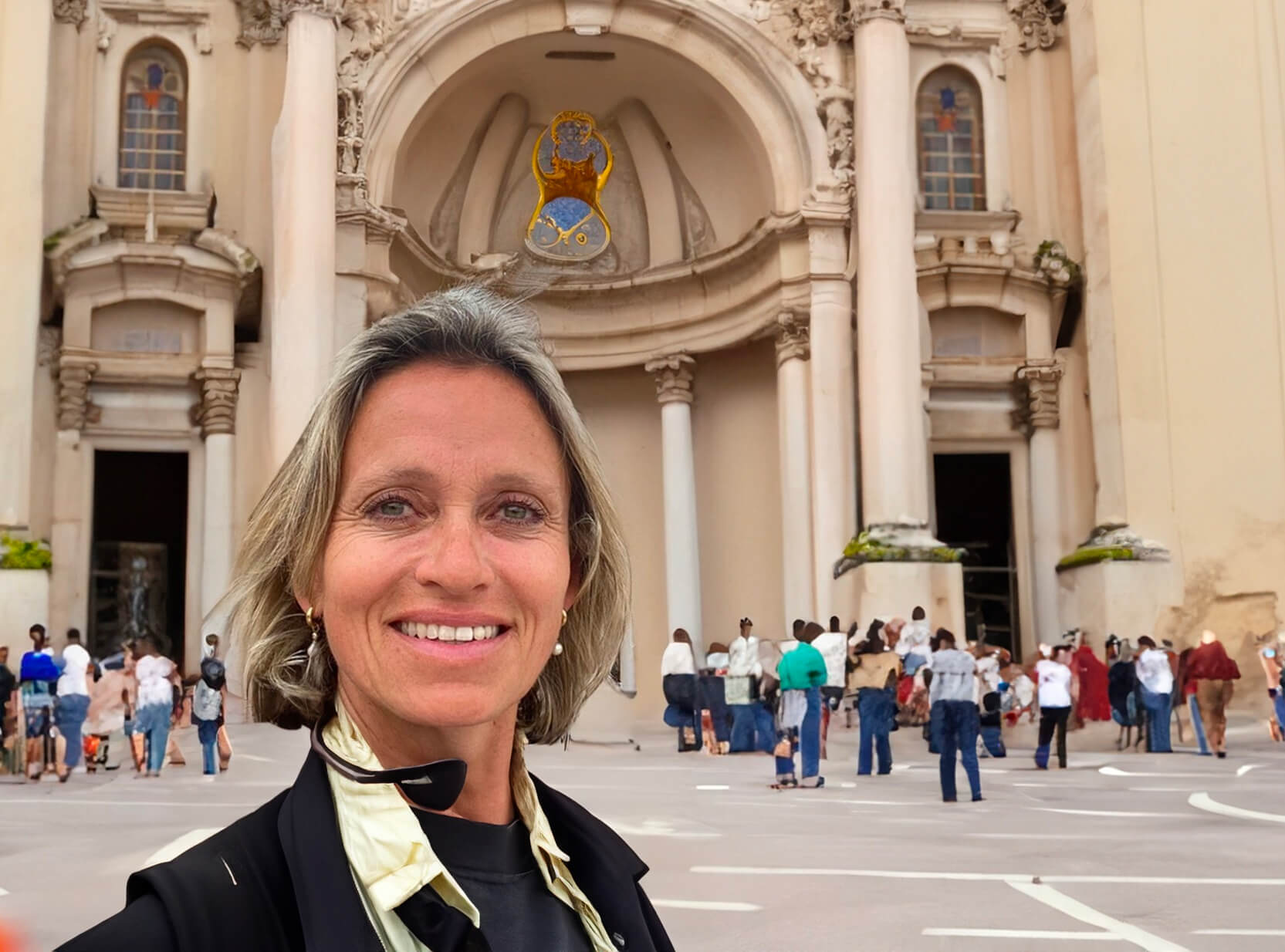
The Church of St. Louis of the French.
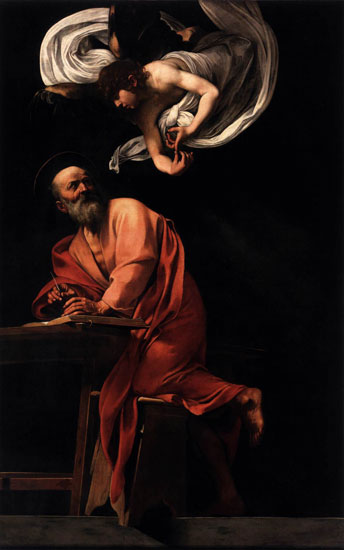
The Church of St. Louis of the French in Rome serves as the national church of the French community, and is dedicated to St. Louis IX, a French king who was canonized in 1297. The church’s Contarelli Chapel contains three canvases commissioned by French Cardinal Mathieu Cointrel and painted by Caravaggio. In 1599, Caravaggio completed The Martyrdom of St. Matthew, followed by The Calling of St. Matthew and St. Matthew and the Angel in 1602. These paintings are considered masterpieces that defy conventional patterns of art. Caravaggio utilized realism in unexpected ways, particularly in his work St. Matthew and the Angel, which was initially rejected for its excessive representation of reality. The use of light, especially in the Vocation of St. Matthew, serves as a guide for the viewer, illuminating the saint who is called by Christ and overshadowing those who ignore the divine presence in the scene.
34 Piazza di S. Luigi de’ Francesi Roma, Lazio
MARTIRIO DI SAN MATTEO

VOCAZIONE DI SAN MATTEO

MARTIRIO DI SAN MATTEO
crocifissione di san pietro
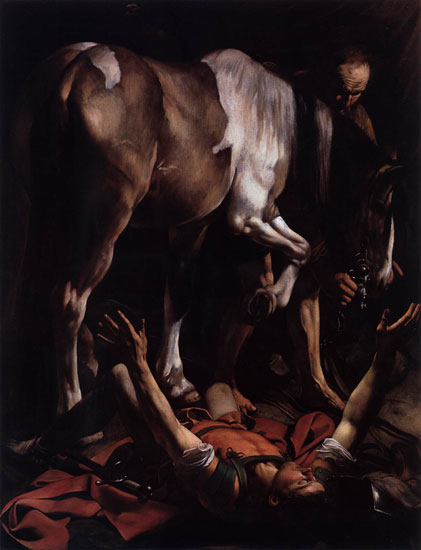
conversione di san paolo
Piazza del Popolo, 12, 00187 Roma RM
The Basilica of Santa Maria del Popolo
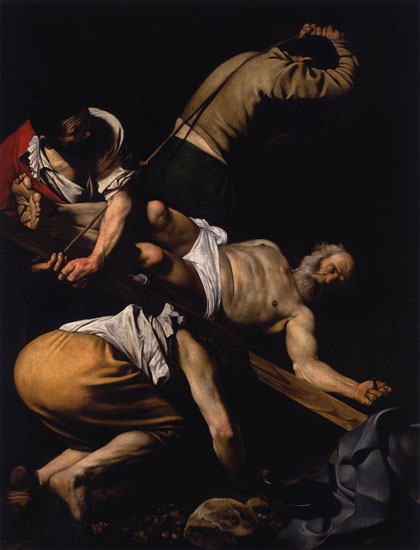
Located in the square of the same name in Rome, the Basilica of Santa Maria del Popolo is one of the city’s most famous churches. Caravaggio was commissioned to work in this church due to the success of his paintings for the Contarelli Chapel. The client, Tiberio Cerasi, was an important Roman jurist who held prominent institutional positions. Cerasi owned a chapel inside the basilica, which became known as the Cerasi Chapel. He commissioned the two greatest artists active in Rome at the time to paint the works to decorate it: Annibale Carracci painted the Assumption of the Virgin, while Caravaggio created the Conversion of St. Paul and the Crucifixion of St. Peter. These two works are also distinguished by their exceptional realism and reinterpretation of traditional iconography. For example, In the Conversion of St. Paul, the horse occupies a much larger space than the saint himself, and the episode takes place in a dark stable instead of outdoors as per tradition. The realism of Caravaggio’s paintings has led scholars to speculate that he used models for his works. These two particular works were started in 1600 and finished in 1601.
La chiesa di Sant’Agostino
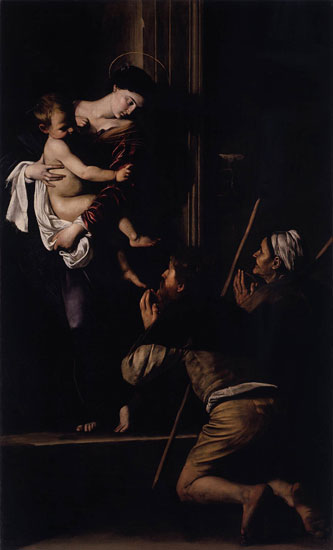
La chiesa di Sant’Agostino, nelle vicinanze di Piazza Navona, è un’altra delle location in cui Caravaggio lavorò durante il periodo di massimo successo. Nel 1603, Orinzia Cavalletti, vedova del notaio bolognese Ermete Cavalletti, commissionò a Caravaggio un dipinto per la cappella che la famiglia aveva acquistato all’interno della chiesa, secondo le volontà espresse nel testamento del defunto. La famiglia e gli esecutori testamentari avviarono quindi le trattative con il pittore, che iniziò a lavorare e, forse nel 1606, consegnò il suo capolavoro, la Madonna dei pellegrini.
La cappella era dedicata alla Madonna di Loreto, a cui Ermete Cavalletti era molto devoto, tanto da intraprendere personalmente un pellegrinaggio nelle Marche poco prima di morire. Caravaggio scelse di rappresentare la Madonna che appare a due poveri pellegrini sporchi e logori. Grazie al realismo elevato e al fatto che i protagonisti sono persone comuni (senza dimenticare che anche la Madonna stessa è raffigurata in modo semplice, come una donna del popolo dell’epoca), l’opera ottenne grande successo tra i ceti più poveri della popolazione romana dell’epoca.
P.za di S. Agostino, 00186 Roma RM